
Structural Drying for St. Francis Homeowners
Water damage does not stop at the surface. When a pipe bursts, a sump pump fails, or a storm sends water into your basement, moisture travels deep into wall cavities, floor assemblies, and wood framing. Emergency Restoration Services provides professional structural drying to St. Francis homeowners who need fast, thorough moisture removal before mold and structural decay set in.
St. Francis sits along the Lake Michigan shoreline, and the combination of lake-effect weather, aging housing stock, and clay-heavy soils means water intrusion is a common and serious problem here. Our crews are familiar with the building types and moisture challenges specific to this community, from postwar bungalows near Kinnickinnic Avenue to newer construction closer to the Oak Creek border. We bring industrial-grade equipment and IICRC-certified expertise to every job.
What’s Included in Our Structural Drying Services
When you hire Emergency Restoration Services for structural drying in St. Francis, you get a complete moisture removal process, not just fans placed in a room. Here is what our service covers from the moment we arrive to the moment we clear the site.
Thermal Imaging and Moisture Mapping
We use thermal imaging cameras and calibrated moisture meters to locate water trapped inside walls, under floors, and within structural cavities that are invisible to the naked eye. This step is critical in older St. Francis homes where plaster walls and original hardwood floors mask significant moisture accumulation. Accurate mapping ensures no wet material is left behind to feed mold growth later.
Commercial Drying Equipment Placement
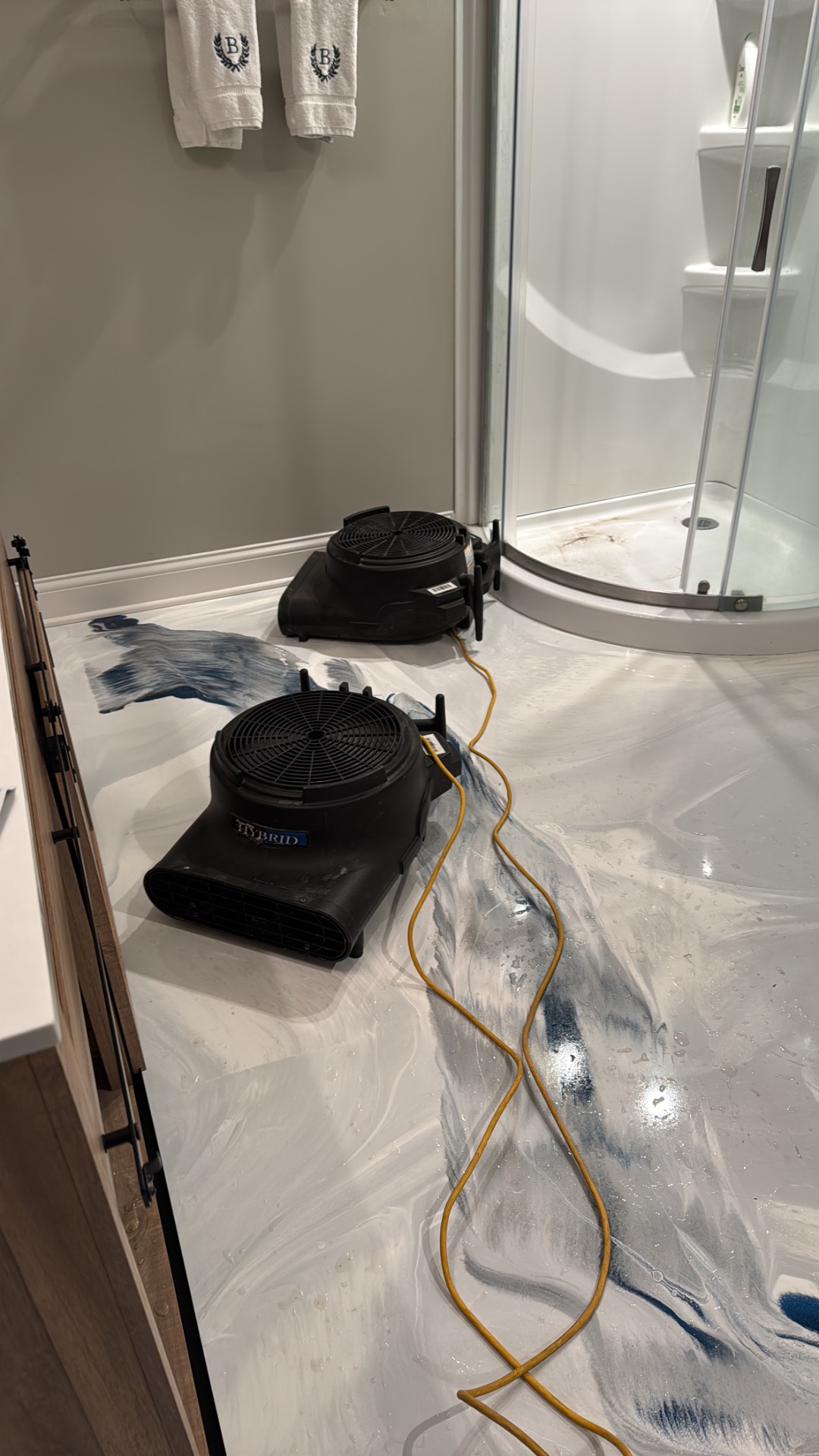
Our technicians deploy high-capacity air movers, refrigerant dehumidifiers, and desiccant units positioned specifically to drive moisture out of structural materials at the fastest safe rate. Equipment is not simply placed at room center and left. We reposition units daily based on updated moisture readings to target the areas that are drying most slowly.
Daily Monitoring and Documentation
Every day our crew visits your St. Francis property to record moisture levels across all monitored points and adjust the drying system as conditions change. We maintain a written drying log that documents progress and supports your insurance claim with verifiable data. Drying is not considered complete until all readings fall within industry-accepted dry standards.
Contact Emergency Restoration Services today to schedule an assessment and get your drying process started right away.
When Do You Need Structural Drying?
Not every water event requires structural drying, but many do, and waiting too long to find out can be a costly mistake. St. Francis homeowners should call for a professional moisture assessment after any of the following situations.
Burst or Leaking Pipes in Older St. Francis Homes
Homes built before 1970 in St. Francis often have galvanized steel supply lines that corrode from the inside and fail without warning, releasing water into walls and subfloors for hours before anyone notices. A single supply line break can saturate wall cavities, soak insulation, and wick moisture into floor joists. Professional drying is the only way to fully address that kind of saturation without tearing out materials unnecessarily. Our team also handles burst pipe repair if the source of the leak still needs to be addressed.
Basement Flooding After Heavy Rain or Sump Failure
Lake-effect storms hitting St. Francis can drop significant rainfall in a short window, overwhelming drainage systems and sending water into basements faster than sump pumps can handle. When a sump pump failure occurs at the same time, the result is often several inches of standing water in finished or semi-finished lower levels. Even after water is extracted, concrete blocks, framing lumber, and drywall retain moisture that must be mechanically dried to prevent mold within 48 hours.
Sewage Backup or Appliance Overflow
A dishwasher line failure, washing machine overflow, or sewage backup introduces water and contaminants simultaneously into flooring and wall assemblies. Beyond the structural drying required to remove moisture, these events also demand proper disinfection and, in the case of sewage, Category 3 water handling protocols. Our team is trained and equipped to manage both the drying and the sewage cleanup safely and in compliance with industry standards.
The sooner you act after water intrusion, the more structure you can save. Delaying even 24 hours increases the risk of mold growth and weakens materials that might otherwise be salvageable.
Our Structural Drying Process for St. Francis Properties
Schedule Your Emergency Call
Call Emergency Restoration Services any time and a real person will take your call and dispatch a crew to your St. Francis address. We ask basic questions about the source of water, the areas affected, and whether extraction is still needed so our team arrives with the right setup. Speed matters here because the first 24 hours determine how much material can be saved.
Assess Moisture Levels Throughout the Structure
On arrival, our technicians conduct a full structural assessment using thermal cameras and moisture meters to document every wet zone inside your home. We check behind walls, under flooring, inside ceiling assemblies, and within any enclosed cavities where water may have traveled. This gives us an accurate picture of the scope and informs the drying equipment strategy. If mold detection and remediation is also needed, we flag that during this phase.
Deploy and Manage the Drying System
We install industrial air movers and dehumidifiers in a calculated configuration designed to create optimal airflow and humidity gradients across wet structural materials. Our crews return daily to check readings, move equipment as needed, and keep you informed of progress. The drying system stays in place until certified dry standards are met at every monitored point.
Complete the Final Inspection and Clear the Site
Before we remove any equipment, we conduct a final moisture check across all previously affected areas to confirm the structure has reached acceptable dryness levels. We provide you with a completed drying log and any documentation needed to support your insurance claim or permit applications. Once everything checks out, we remove our equipment, clear the work area, and walk you through the results before we leave.