
Structural Drying for Glendale, WI Homeowners
When a burst pipe, flooded basement, or storm backup soaks into your walls and floors, the clock starts immediately. Moisture trapped inside structural materials leads to mold, rot, and weakened framing that costs far more to fix later. Emergency Restoration Services provides professional structural drying for homes and businesses throughout Glendale and the surrounding North Shore communities.
Glendale properties present specific challenges. Many homes along Green Bay Road and near the Milwaukee River corridor are older, with wood-frame construction that absorbs water quickly. Finished lower levels are common in the area, meaning water that enters through sump pump failure or a backed-up floor drain can saturate multiple material layers before it is ever noticed. Our team understands these local conditions and brings the right tools to address them thoroughly.
What’s Included in Our Structural Drying Services
When you hire Emergency Restoration Services for structural drying in Glendale, you get a documented, equipment-driven process designed to remove moisture at the structural level, not just at the surface. Every job includes moisture mapping, drying equipment placement, daily monitoring, and a final clearance reading before we leave.
Thermal Imaging and Moisture Mapping
We use thermal imaging cameras and calibrated moisture meters to locate water inside wall cavities, under subfloors, and in ceiling assemblies. This step is critical in Glendale homes where water often migrates far from the original source. Mapping the full extent of saturation prevents hidden pockets of moisture from causing mold weeks after the job appears finished.
Industrial Air Movers and Dehumidification
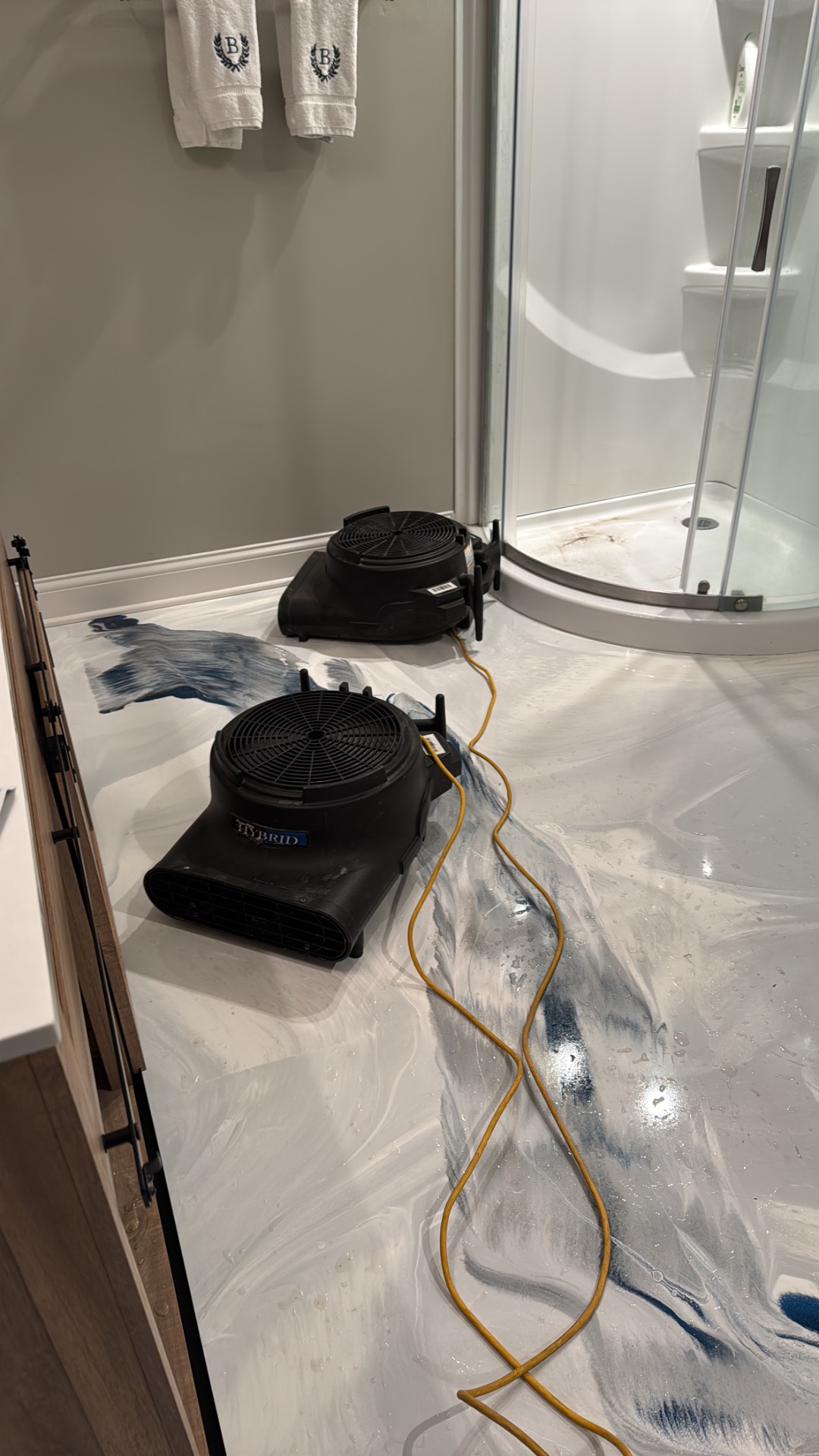
We place commercial-grade air movers in a calculated pattern to accelerate evaporation from wet materials. Refrigerant and desiccant dehumidifiers then pull that moisture out of the air continuously. For enclosed cavities common in older Glendale construction, we use injectidry systems to circulate dry air inside wall and floor assemblies without unnecessary demolition.
Daily Monitoring and Documentation
Every drying job is monitored daily with logged moisture readings. This documentation matters for your insurance claim and confirms that drying is progressing as expected. We do not remove equipment or close out a job until all materials reach the dry standard set by IICRC S500 guidelines.
Contact us today to get a drying assessment scheduled for your Glendale property.
Signs You Need Professional Structural Drying in Glendale
Not every water damage situation is obvious at first glance. Glendale homeowners often call us days after an incident when they notice secondary symptoms that point to moisture still trapped inside the structure. Knowing the warning signs can help you act before the damage compounds.
Musty Odors After a Flood or Leak
A persistent musty smell after a water event is one of the clearest signs that moisture is still present inside walls or under flooring. In finished basements common across Glendale neighborhoods, that odor often means water got behind drywall or under carpet padding. Consumer fans and dehumidifiers cannot reach those areas effectively.
Warping Floors or Buckling Drywall in Older Homes
Many homes near Glendale’s Silver Spring Drive corridor were built in the 1950s and 1960s with materials that react visibly to moisture. Hardwood floors that start to cup or drywall that bubbles are signs of active moisture content in the structure. These symptoms will worsen without professional intervention and can eventually compromise structural integrity.
Sump Pump Failure or Sewage Backup
Glendale’s low-lying areas near the Milwaukee River are prone to basement flooding when sump pumps fail during heavy rain events. A sump pump failure can send hundreds of gallons of water across a basement floor in hours. Water from these events wicks into concrete blocks, framing lumber, and insulation quickly and requires professional drying equipment to remove completely.
If you are seeing any of these signs in your Glendale home, do not wait. The longer moisture stays trapped, the more damage it causes.
Our Structural Drying Process for Glendale Properties
Schedule Your Emergency Assessment
Call us any time and a live technician will respond to your Glendale address quickly. We ask about the water source, when the event occurred, and what areas appear affected so we arrive with the right equipment loaded. For active flooding situations, we prioritize same-day response.
Inspect and Map All Affected Areas
Our technicians walk the entire property with thermal cameras and moisture meters, documenting every reading. In Glendale homes with multiple finished levels or older framing systems, this step often reveals water migration far beyond the visible wet zone. A complete moisture map guides our equipment placement and sets the benchmark for tracking drying progress each day.
Deploy Equipment and Dry the Structure
We set up industrial air movers and dehumidifiers in a configuration matched to your floor plan, material types, and moisture levels. For homes with water in wall cavities, we use specialized drying systems that work without removing drywall where possible. Our technicians return daily to check readings, adjust equipment placement, and log all data for your insurance file.
We also handle related services like mold detection and remediation, flood cleanup, and sewage cleanup if your situation involves those issues alongside structural moisture.
Confirm Clearance and Complete Final Walkthrough
Before we remove any equipment, we take final moisture readings across every documented area and confirm all materials have reached acceptable dry standards. We walk you through the results and provide full documentation for your insurance claim. If any follow-up repairs are needed, we can advise on next steps or coordinate with your contractor.